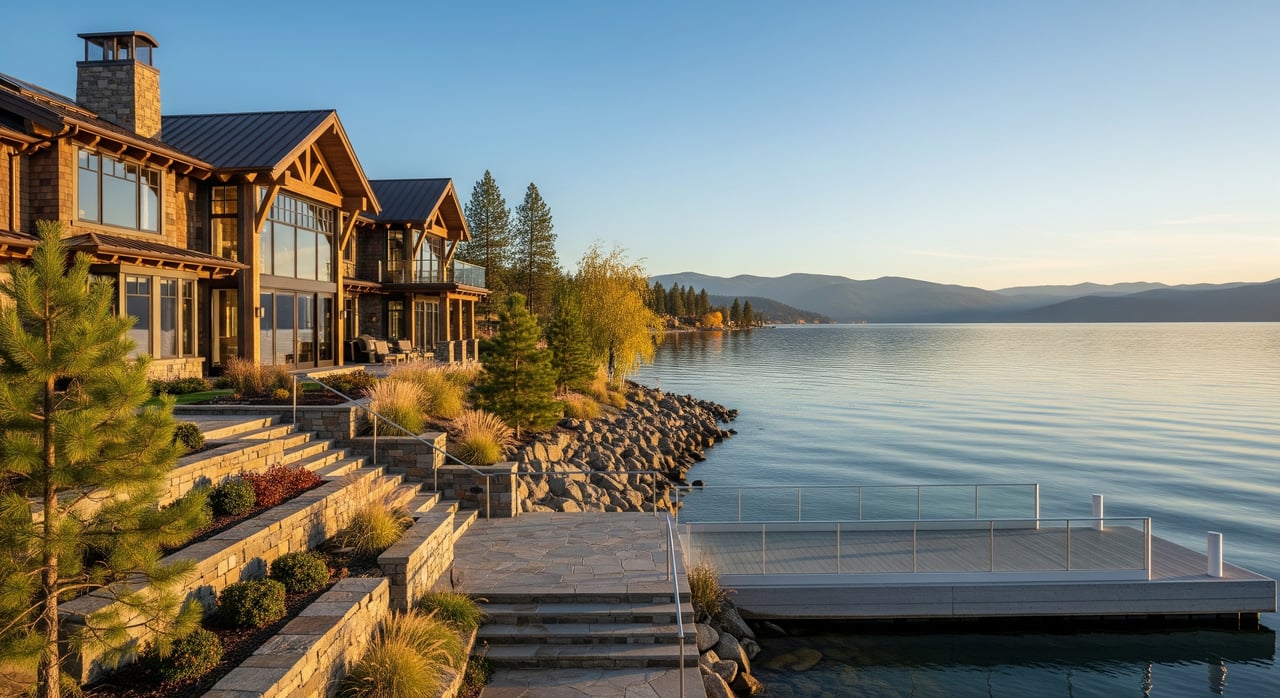
You want your Coeur d’Alene home purchase to stand on solid ground, especially if you are eyeing lakefront, acreage, or a high‑value retreat. Title insurance is one of the quiet safeguards that helps you buy with confidence. In this guide, you will learn exactly what it covers in Idaho, what it does not, the endorsements that matter for waterfront and rural parcels, costs and who typically pays, and the steps to a clean closing. Let’s dive in.
Title insurance basics in Idaho
Title insurance protects you from financial loss caused by covered defects in the ownership history of a property that existed before you closed. It is different from homeowner’s insurance because it looks backward at title issues rather than future events. In Idaho, title companies and agents are regulated by the Idaho Department of Insurance, and most policies follow American Land Title Association forms with some state variations.
Owner vs. lender policies
- Owner’s policy protects you, the buyer, up to the purchase price. It is optional but strongly recommended.
- Lender’s policy protects your lender up to the loan amount. Most lenders require it when you finance.
- Both are one‑time premiums paid at closing and include the title company’s promise to defend covered claims.
What the title commitment does
Before closing, you receive a title commitment that previews what the title company will insure and what it will exclude. Schedule A lists the basics, like the legal description and insured amount. Schedule B lists requirements to fix and exceptions that will not be covered unless removed, such as recorded easements or liens.
What title insurance covers
A standard owner’s policy typically covers:
- Legal defense costs for covered claims.
- Loss from forged or fraudulent deeds or signatures in the chain of title.
- Errors in public records or incorrect indexing that affect ownership.
- Undisclosed liens or judgments that predate your policy.
- Issues with spousal signatures and certain defects that cloud marketable title.
What it usually does not cover
Title insurance will not cover everything. Common exclusions include:
- Items listed as exceptions in Schedule B of your policy.
- Zoning or building code compliance and other government regulations unless endorsed.
- Problems arising after the policy date, like new liens or taxes.
- Matters a precise survey would reveal if the policy has a survey exception.
- Rights of parties in possession that are not recorded, unless specifically endorsed.
Coeur d’Alene risks to watch
When you buy in Coeur d’Alene or greater Kootenai County, certain property types carry unique title exposure. Plan for these early, and lean on your title team for clarity.
Waterfront homes and shoreline parcels
- Riparian and littoral rights: Confirm whether dock, mooring, and use rights are included in the deed. Rights can be limited or reserved.
- Public versus private shorelines: Identify any recorded easements or prescriptive access that affect your shoreline or pathways.
- Permits and improvements: Older docks, seawalls, or shore work may lack permits. Title insurance generally does not cover permit or regulatory compliance issues.
- Shifting boundaries: Water level changes, accretion, or erosion can affect boundary lines. A current survey paired with endorsements helps clarify coverage.
Acreage and rural parcels
- Water rights: In Idaho, water rights are a separate property interest regulated by the Idaho Department of Water Resources. They may not transfer unless explicitly conveyed. Title policies can sometimes endorse recorded water rights, but quantity and quality are typically excluded.
- Access: Rural tracts often rely on easements or private roads. Confirm recorded, insurable access and consider an access endorsement.
- Mineral reservations: Subsurface rights may have been severed. Understand any reservations in prior deeds and whether endorsements are available.
- Irrigation and agricultural liens: Irrigation district assessments or farm liens are recorded matters that should appear in your title search.
- Boundary clarity: Large parcels using older metes‑and‑bounds descriptions can hide ambiguities. A survey plus the right endorsements can reduce risk.
Luxury communities and HOAs
- Covenants, conditions, and restrictions: These are usually recorded and appear as exceptions unless addressed by endorsements.
- Higher stakes: Larger purchase prices mean larger potential losses. Confirm your owner’s policy limit matches your purchase price and consider endorsements that fit the property type.
Endorsements that add protection
Endorsements are add‑ons that tailor your policy to specific risks common in Coeur d’Alene.
Survey and access endorsements
- Survey or plat endorsement: Helps with boundary, encroachment, and certain easement issues that a survey reveals.
- Access endorsement: Insures that you have vehicular and pedestrian access to a public road.
Water and mineral‑related endorsements
- Water rights or irrigation endorsement: Addresses recorded water rights or irrigation district matters when available.
- Mineral rights endorsement: Helps when mineral reservations or historic claims appear in the chain of title.
- ALTA forms like ALTA 9 for restrictions and ALTA 5 for access are common tools. Availability and wording vary by state and underwriter, so request specifics and pricing early.
Costs and who usually pays in Idaho
You pay a one‑time premium at closing. The total includes the owner’s policy premium if you elect it, the lender’s policy premium if you finance, search and exam fees, closing or escrow fees, recording fees, and any endorsement charges. Rates are filed with the state regulator, so premiums are often similar across underwriters, although endorsement pricing and escrow fees can vary.
Customs on who pays differ across Idaho and even by market segment. In many transactions it is common for the seller to pay for the owner’s policy, while the buyer typically pays for the lender’s policy when financing. In luxury or unique property sales, parties may negotiate differently. Your purchase contract should clearly state who pays for what.
From search to policy: the process
Here is how title typically moves from order to issued policy in Idaho:
- Engagement: You, your agent, or the listing side selects a title company and opens the file.
- Search and exam: The title examiner reviews county records, including deeds, mortgages, liens, judgments, plats, tax records, and recorded easements.
- Title commitment: You receive a preliminary report with Schedule A basics and Schedule B requirements and exceptions.
- Resolution and closing: The title company coordinates payoff of liens, releases, and any corrective deeds, then issues policies after funds disburse and recording occurs.
- Post‑closing: Final policies are sent to you and your lender. If a covered claim arises later, the policy includes legal defense up to the policy limit.
Smart Coeur d’Alene buyer checklist
Use this quick list to stay ahead of common pitfalls:
- Review your title commitment as soon as it arrives, especially Schedule B exceptions and requirements.
- For waterfront or acreage, order a current ALTA/ACSM survey if one is not available, and confirm dock lines, access points, and boundary markers.
- Ask your title officer which endorsements they recommend for your specific property and get itemized quotes before you finalize terms.
- Confirm who pays for the owner’s and lender’s policies in your purchase agreement and request a written fee estimate from the title company.
- If water rights, mineral reservations, timber rights, or historic mining claims appear in the chain of title, consult your title professional and consider engaging an Idaho real estate attorney.
Real problems title insurance can help solve
- Forged deed: A prior owner’s signature was fraudulent and clouds your ownership. Your policy can defend and cover loss, subject to limits.
- Unknown heirs: An heir surfaces years later claiming the property through an estate issue. Your policy can respond to covered claims.
- Undisclosed lien: A pre‑existing contractor or tax lien was missed or mis‑indexed. Your policy can cover loss if it predates the policy and was not disclosed.
- Encroachment discovered by survey: A neighbor’s structure crosses your boundary. With the right endorsement, your policy may cover loss or defense costs.
- Overlooked recorded easement: A utility or access easement significantly limits use and was not excepted. Your policy can address covered loss.
Plain‑language title terms
- Title: Your legal right to own, use, and sell land.
- Deed: The document that transfers ownership from seller to buyer.
- Chain of title: The recorded history of ownership for a parcel.
- Title search or exam: The review of public records to find liens, easements, and claims.
- Title commitment: The pre‑closing report that lists what the title company will insure and what it will not.
- Owner’s policy: Coverage for you up to the purchase price.
- Lender’s policy: Coverage for your lender up to the loan amount.
- Premium: The one‑time fee you pay at closing.
- Schedule A: The who, what, and legal description of the insured property.
- Schedule B: Exceptions and requirements that limit or condition coverage.
- Exception: An item your policy does not cover unless removed or endorsed.
- Encumbrance: Any claim, lien, easement, or restriction on the property.
- Lien: A legal claim that secures payment of a debt.
- Easement: Someone else’s right to use part of your land for a specific purpose.
- Encroachment: A structure that crosses a boundary line.
- Survey: A professional map of boundaries, improvements, and easements.
- Quiet title action: A court process to settle ownership disputes.
- ALTA: The association that sets standard title forms and endorsements.
- Endorsement: An amendment to a policy that adds specific coverage.
- Vesting: How you hold title, such as joint tenants or in a trust.
- Marketable title: Ownership that is free from serious defects and readily sellable.
How to move forward with confidence
If you are buying in Coeur d’Alene, title insurance is not just a box to check. It is a practical tool that protects your investment, especially if you are purchasing lakefront, acreage, or a high‑value home. Review the commitment early, pair the right endorsements with a current survey, and confirm who pays for which policies in your contract.
When you want calm, detail‑driven coordination from contract to close, reach out to Eva Scherer and the Inland Northwest Lifestyles team. We align your lifestyle goals with the right property and help you navigate title with clarity so your closing feels as solid as your new front door. Elevate Your Lifestyle with Eva Scherer.
FAQs
What does title insurance cover for Idaho buyers?
- It typically covers legal defense and loss from covered pre‑closing defects like forged deeds, undisclosed liens, errors in public records, and certain issues that cloud marketable title.
Do I need an owner’s policy if my lender requires a policy?
- Yes if you want personal protection, because the lender’s policy only protects the lender up to the loan amount while an owner’s policy protects you up to the purchase price.
Who usually pays for title insurance in Kootenai County?
- Customs vary and are negotiable, but it is common in many Idaho transactions for the seller to pay the owner’s policy and the buyer to pay the lender’s policy when financing.
Which endorsements are most useful for Coeur d’Alene waterfront homes?
- Survey or plat, access, and water‑related endorsements are often important, and availability depends on your title company and underwriter.
Will title insurance cover zoning or building permit issues?
- Generally no, unless you purchase a specific endorsement that addresses those risks, so plan for separate due diligence on permits and code compliance.